วันเสาร์ที่ 29 พฤษภาคม พ.ศ. 2553

Jamnager Biggest Refinery กับความเสี่ยงแผ่นดินไหว

ผังเมือง - ผังโรงงาน
ปี 2001 เหตุแผ่นดินไหว ครั้งที่รุนแรง มีผู้เสียชีวิตมากกว่า 13,000 คน ที่รัฐกุจาราช และเป็นฝันร้ายตลอดมาของคนในเมือง แจมนาเกอร์


โรงกลั่นของ แจมนาเจอร์ อยู่ห่างไกลชุมชนมาก แต่การดำเนินการก่อสร้างฐานราก คงเป็น ฐานรากตื้นเป็นส่วนใหญ่ ไม่มีข้อมูลเสาเข็มที่ชัดเจน แต่ส่วนของ PipeRack ทั้งหมด ไม่น่าจะมีเสาเข็ม ใช้ค่ารับน้ำหนักปลอดภัยของดิน ที่ 30 ตัน/ม2 แต่ก้อมีหอสูงจำนวนมาก มีของมูลการใช้ เสาเข็มเจาะแต่ไม่ชัดเจน การดำเนินการก่อสร้าง ใช้เวลาสำหรับงานโยธาประมาณ 1 ปีครึ่ง เพิ่งเปิดใช้งาน ต้นปี 2010 ในส่วนขยายที่สร้างขึ้นใหม่ (เมื่อปี 2001 เดือน มกราคม เคยเกิดแผ่นดินไหวขนาด 6.9 ริกเตอร์ สร้างความเสียหายกับอาคารเก่าแก่จำนวนมาก ดูข้อมูลด้านล่าง)


ภาพคุ้นเคยกับ Precast Pipe Rack ซึ่งหล่อทิ้งไว้รอการติดตั้งจำนวนมาก


มองไปไกลจะเห็นคลังก๊าซและคลังน้ำมันขนาดใหญ่


ฺBechtel / Foster Wheeler เป็นวิศวกรที่ปรึกษา


คลิ๊กขวาที่รูปเปิดหน้าต่างใหม่ ค่า 300 kn/m2 = 30 t/m2 ระดับขุดลึก 1 เมตร


When Bechtel completed the Reliance Jamnagar complex in northwest India, it was the largest refinery and petrochemicals complex ever built from the ground up. Now it's even bigger, and lays claim to being the world's largest oil-refining hub.

A second refinery, adjacent to the first, was completed in 2008, nearly doubling the facility's capacity to more than 1.2 million barrels per day.

Construction of the second refinery required over 200,000 engineering and supplier documents, 1.5 million cubic meters of concrete, more than 4 million meters of piping, and 4,400 pieces of major equipment. The work site itself covered an area larger than London.

At peak construction, the project employed more than 70,000 workers. In addition, Bechtel created a “virtual company” involving some 2,800 engineers and other professionals in 19 offices around the world—perhaps the most widely distributed workforce Bechtel has ever applied to a project.

Reliance Industries is the only Indian company included in the Fortune Global 500. And it continues to be a valued customer of Bechtel.

The Jamnagar complex in northwest India is the largest refinery and petrochemicals complex ever built from the ground up—and it’s about to get even bigger. Bechtel and Reliance Petroleum Ltd. are expanding Jamnagar in a project that will create the world’s largest oil-refining operation, period.

When Bechtel completed the design and construction of the first refinery at Jamnagar in 2000, it had a production capacity of 450,000 barrels of crude oil per day. Subsequently the capacity was increased to 650,000 barrels per day, and today, Jamnagar accounts for nearly one-quarter of India’s refining capacity.

A second refinery, under construction adjacent to the first, will nearly double the capacity, while also increasing the capability and flexibility of the complex by allowing it to utilize lower-grade crude oil and produce higher-value products. In addition to gasoline, diesel, jet, and other fuels produced by the original refinery, it will also increase production of polypropylene, which is used in the creation of products such as fibers, films, and household plastic goods. The gasoline and diesel are for export, predominantly to the United States and Europe.

Bechtel is undertaking the expansion with Reliance Petroleum Ltd., a new company created by Reliance Industries.

Building the new refinery entails over 200,000 engineering and supplier documents, installation of 165,000 tons (150,000 tonnes) and 53 million cubic feet (1.5 million cubic meters) of concrete, more than 4,400 pieces of major equipment in over a dozen complexes within the refinery, and 13 million feet (4 million meters) of piping. The site covers an area bigger than London, and more than 70,000 workers will be employed during the peak of construction.

To meet the challenge, Bechtel created a “virtual company” with global resources. Some 2,800 professionals are handling engineering, procurement, project management, and construction consulting from London, Houston, Frederick, Toronto, Shanghai, New Delhi, Mumbai, and Jamnagar. All told, the project encompasses 19 offices and 10 cities in five countries. Scott Johnson, program director for the new refinery, believes that this is the most widely distributed workforce Bechtel has ever applied to a project.

The goal is to make it possible for everybody to work together as if they’re in the same place, and Bechtel has ensured this outcome through a purpose-built communications network. This network reaches every location and enables simultaneous collaborative work on engineering drawings and other documents among people in multiple locations around the globe. Bechtel has also modified various software to facilitate the immense amount of sharing and record-keeping required.

Integrating the offices and communications has eased such tasks as ensuring that the output from the coker—designed by a subcontractor—and crude complexes supports the requirements for the clean fuels complex designed by Bechtel’s Houston office and the vacuum gas oil complex designed in London. “Now we think in terms of integrated work rather than separate engineering disciplines,” Johnson says.

The virtual team has been especially important in keeping the project on its aggressive record-breaking schedule. Work began in October 2005, with the first production train scheduled to begin operations 30 months later.

With Bechtel and Reliance sharing responsibility for the project, design and construction phases have significantly overlapped; construction is well under way before design is complete. As of January 2007, about 65 percent of the engineering had been finished, while crews in Jamnagar had already completed site preparation and poured over 50 percent of the concrete, including most of the concrete pipe racks. In addition, some 28,000 tons (25,000 tonnes) of structural steel and 20 percent of the piping have been fabricated.

The virtual organization also has been instrumental in procuring goods and services from far-flung suppliers at the best possible prices.

“The marketplace is robust—every day prices are increasing and deliveries getting longer, so buying early has saved money and time,” Johnson says. “We’ve placed orders for $3.5 billion worth of materials, including over 4,000 pieces of equipment, and a lot of this we bought before engineering was complete so we could lock in supplies ahead of shortages we could see coming. In some cases, we bought first and designed later around what we bought. But that’s part of keeping to the schedule.”

Transportation is another project in itself, requiring hundreds of ships. Ships have been identified and reserved for the largest equipment, which reaches more than 1,650 tons (1,500 tonnes) and close to 330 feet (100 meters) in length. In addition, the port serving the complex is being expanded to accommodate very large crude-oil carriers, along with additional ships to transport the export products.

The new refinery will open windows of opportunity within India. The first refinery, which Bechtel designed and built for Reliance Industries Ltd., was able to satisfy one-third of India’s needs for refined petroleum products in 2001, sustaining downstream activity worth $26 billion, one-sixth of India’s economy that year. It also enabled India to become a net exporter of oil products for the first time. The new refinery is expected to increase India’s exports, with its gasoline and diesel earmarked for the U.S. and European markets. According to Mukesh Ambani, Reliance Industries’ chairman, the new refinery supports the com-pany’s “two-fold strategy: strengthening the petroleum retailing business and enlarging the refining capacity.” Its scale is rivaled only by refineries being proposed for Taiwan and Kuwait.

Reliance Industries is the only Indian company included in the Fortune Global 500. It has had great success in an industry formerly dominated by state-owned companies, and its new chain of retail gas stations now accounts for 12 percent of diesel and 6 percent of gasoline sales in India. And it continues to be a valued customer of Bechtel.

UNESCO MISSION TO THE EARTHQUAKE DAMAGE DISTRICT IN GUJARAT, INDIA, FOR THE CONSERVATION OF CULTURAL PROPERTIES, MARCH 1-15, 2001


Jamnagar


all photographs (except as marked) © by Randolph Langenbach / UNESCO, 2001


Click on photos to enlarge


1) Jam-in-doorway.jpg (160992 bytes) 2) Jamnagar-20-19.jpg (55285 bytes)


1) Jamsaheb, the Maharaja of Jamnagar leading the visit to the ancient Durbargarh in Jamnagar. 2) This, the exterior gateway to the Darbargarh is all that the public has been aware of about the complex for almost 100 years.


FROM THE UNESCO REPORT: Of those monuments not under protection, the most significant ones found on this mission to be at the greatest risk are the original “Darbargarhs,” the city palaces of the former kings of the princely kingdoms that at one time made up the region. The Darbargarhs pre-dated the coming of the British, and thus contain architecture, art, and sometimes-even artifacts, dating back several hundred years with less influence from Europe. During the British Raj period, many of these Maharajas constructed new palaces on the edges of the cities and towns, moving out of the center of their cities and away from their subjects. As a result, some of these original palaces have seen little use for close to a hundred years. They have remained essentially in mothballs hidden away from view except for a few sections which are open to the public, such as the Aina Mahal Museum at the Darbargarh in Bhuj.


While many of the British period palaces are also architecturally significant and damaged as well, it is these older palaces that have been identified on this mission to embody the most cultural and historical significance to the region and to India as a whole. At the time that they were constructed and over the centuries that they were used, they formed the administrative and cultural center for the princely states.


The Darbargarh of Jamnagar is one of the most magical, yet least widely known, historic complex in all of India. Sir Bernard Feilden and William Connal, noted restoration architects inf Great Britain, consider this palace complex possibly to be the single most impressive secular heritage site in Western India.


The Darbargarh was inspected at the invitation of Jamsaheb, the Maharaja of Jamnagar. Entering parts of this extensive complex was like entering a lost world with extensive evidence of a rich a varied history, as well as possessing significant artistic and architectural details. Artifacts, some with evidence of not having been disturbed for more than a generation or two, were stacked or arranged in hidden rooms – rooms which remained locked and protected until the earthquake has now broken them open and placed the buildings and their contents at immediate of loss and destruction.


The Jamsaheb personally lead the site visit of the ancient palace complex, which was located in the heart of Jamnagar, but exists today as a hidden and nearly forgotten complex of ancient buildings. Because new palaces had been built in the early part of the 20th century under the British period on the outskirts of the city, this original palace has rarely been used for almost a century, and hardly at all for the last 30 years. The Jamnagar Darbargarh suffered significant damage in the earthquake, but not nearly as extensively as did the one in Bhuj. Visiting this complex was more like walking through a lost city, than a single building, with courtyards opening off of courtyards, each with its own distinctive art and architectural presentation. With the commentary by the Jamsaheb, the deep history of the place came alive as we passed through dusty rooms filled with wall paintings, mirrors in gilt frames, and thousands of dust covered and decaying artifacts of a departed way of life - a way of life, however, which existed near enough in time to be still within the living memory of some within the city.


3) durbar-int-archway.jpg (30624 bytes) 4) durbar-ornamental-fac.jpg (41471 bytes)


2) Interior court and archway 3) Durbar Hall exterior


5) durbar-hall.jpg (23213 bytes) 6) durbar-mirror-rm.jpg (43186 bytes) 7) durbar-harem-shutters.jpg (31747 bytes)


4) Durbar Hall interior. 5) Top floor mirror hall in the private apartments of the Maharaja 6) Screened porch of one apartment for one of the wives in the Harem section of the palace.


In rooms now cracked open in places by the earthquake were wall paintings showing armies of olive shaped eyed men and women in settings from battlefields to palaces and ashrams. In other rooms, thirty years of dust accumulation had to be swept away to reveal portraits of bejeweled princes, and photographs of city monuments. In one corner was an entire crate of ornamental swords in their scabbards. In another room – unseen by all but a few for several generations - was a room completely lined with ornamental mirrors and paintings – not unlike the one found in the Aina Mahal Museum in Bhuj, which now also is partly collapsed. The rooms in this ancient palace were for the most part small and intimate, not grand or vast, as found in the later palaces. Instead of being designed to impress one of wealth, they bespeak a way of life that was uniquely Indian – as the palaces in the pre-British period were not houses only for the Maharaja’s but small cities that housed the entire court that served as the government of each kingdom.


JAMNAGAR DARBARGARH; Rooms full of dust covered pictures of former nobles, princes, kings and views of the city - with the images visible only after the dust was wiped off - were opened up after the earthquake for the first time in years.


วันพุธที่ 26 พฤษภาคม พ.ศ. 2553

ขอศาลปกครองไต่สวนฉุกเฉิน

27 พฤษภาคม 2553 เวลา 9.30 น. ยื่นคำฟ้องและคำขอให้ไต่สวนฉุกเฉิน


....
เพื่อยับยั้งเหตุสลดที่อาจจะเกิดขึ้นได้ จากความเสี่ยงสูงมากที่มาจากการขออนุมัติและการอนุมัติ แบบและโครงการ รวมทั้งการดำเนินการต่างๆ ที่กระทำโดยมิชอบด้วยกฎหมายของผู้ถูกฟ้อง แม้จะอ้างว่าต้องเร่งรัดโครงการให้ทันตามแผนกำหนด เพื่อหลีกเลี่ยงผลกระทบต่างๆด้านเศรษฐกิจหรือค่าชดเชยส่วนต่างของการซื้อก๊าซแอลพีจีจากต่างประเทศมาใช้ในราคาแพง ที่เป็นภาระของผู้ใช้น้ำมันโดยรวมนั้น ไม่ใช่เหตุผลที่หน่วยงานของรัฐ จะละเลยมาตรฐานการก่อสร้างโรงงานที่อันตราย เพราะเป็นโรงงานที่เกิดการระเบิดได้ ซึ่งจำเป็นจะต้องทำให้มีเสถียรภาพและแข็งแรงเป็นพิเศษ จนไม่มีความเสี่ยงที่จะทรุดพัง ตลอดอายุการใช้งานประมาณ 25-30 ปีของโรงแยกก๊าซ ทั้ง 2 จึงจำเป็นที่ต้องขอให้มีขบวนการไต่สวน

จากเหตุอันอาจจะก่อให้เกิดผลเสียหายใหญ่หลวงในวงกว้างดังที่กล่าวในข้างต้น และขณะนี้เป็นช่วงของฤดูฝน การที่ฝนตกติดต่อกันหลายวัน จะทำให้ดินชุ่มไปด้วยน้ำและลดการรับแรง รับน้ำหนักต่างๆ ประกอบกับการมีพายุลมแรง อาจจะทำให้เกิดการล้มพังของโครงสร้างที่ไม่ได้ตอกเสาเข็มได้ เช่นดังต้นไม้ใหญ่แม้มีรากหยั่งลึกเสมือนเสาเข็มที่ยึดโยงแล้วนั้น ยังล้มยกทั้งรากทั้งดินขึ้นมาเพราะเจอพายุฝนลมแรง ดังที่ปรากฏให้เห็นอยู่ทั่วไป ซึ่งทำให้เกิดความวิตกกังวลขวัญแขวนในส่วนผู้ที่ได้รับรู้ข้อมูลเรื่องนี้แล้วจำนวนมาก เพื่อโปรดพิจารณาวินิจฉัยให้มีการไต่สวนฉุกเฉิน

เพื่อขอให้ศาลมีคำสั่ง - ให้ผู้ถูกฟ้องทั้งหมด สั่งระงับหรือสั่งหยุดการดำเนินการต่างๆของโรงงานทั้งหมดไว้ และนำก๊าซแอลพีจี ที่เติมเข้าไปแล้วในถังเก็บก๊าซแอลพีจีทรงกลมขนาดใหญ่ ที่เพิ่งก่อสร้างใหม่ 3 ถังออก จนกว่าจะมีคำพิพากษาถึงที่สุด โดยละเว้นระบบดับเพลิงและหล่อน้ำต่างๆ ให้ยังคงดำเนินการต่อไปได้

เพื่อศาลโปรดพิจารณา


...


วันอังคารที่ 25 พฤษภาคม พ.ศ. 2553

ภาพเสี่ยงตาย ที่นายกอภิสิทธิ์ ต้องดู


เข้าใจว่า ... ที่ผ่านมาได้รับรู้เรื่องนี้ ไปแล้วบ่อยครั้งทาง อีเมล์ แต่คนเปิดอีเมล์คงไม่ได้ใส่ใจ ในเมื่อคนระดับนายกรู้แล้ว ปล่อยให้เรื่องเหล่านี้ ผ่านไปโดยไม่แยแส ก้อไม่ต่างอะไร กับการปล่อยให้คนใส่เสื้อแดง เผากรุงเทพฯ เผาศาลากลาง รัฐบาลมีเครื่องมือมากมาย ขณะที่ประกาศสภาวะฉุกเฉินที่มีความร้ายแรง แต่การหยุดเฉยเฉื่อยชาในการเข้าระงับเหตุ ด้วยกลัวจะมีคนบาดเจ็บล้มตายเพิ่ม / รัฐบาลเริ่มทำโทษข้าราชการ ที่ไม่สามารถปกป้องศาลากลาง เพราะยึดนโยบาย ต้องไม่เจ็บไม่ตาย จนศาลากลาง สถานที่ราชการ โรงเรียนจำนวนมาก ถูกเผาวอดวาย ..... และบัดนนี้ กำลังทิ้งความเสี่ยงให้กับคนมาบตาพุด


วันเสาร์ที่ 22 พฤษภาคม พ.ศ. 2553

โรงแยกก๊าซ ปตท. ความมั่นคงทางพลังงานบนความเสี่ยง


โรงแยกก๊าซ ปตท. มาบตาพุด ระยอง
โดยปกติโรงงานก๊าซไวไฟและสารเคมีอันตราย มีความเสี่ยงที่จะรั่วระเบิด อันมาจากปัญหาทั่วไป เช่นการทำงานคาดเคลื่อนของมนุษย์ ความผิดพลาดบกพร่องในการเดินครื่องจักร ความแข็งแรงแน่นหนาของวัสดุ-อุปกรณ์ต่างๆที่เลือกใช้ การออกแบบผิดพลาด การเยื้องศูนย์ของแนวท่อและแกนเครื่องจักร ปัญหาสภาวะอากาศ พายุ ฝน-ลูกเห็บ ฟ้าผ่า หรือ แผ่นดินไหว ซึ่งมีโอกาสก่อให้เกิดอันตรายรุนแรงอยู่แล้ว แต่การเพิ่มความเสี่ยงสูงที่ฐานรากซึ่งเป็นส่วนสำคัญที่สุด ที่ทำให้เกิดความมีเสถียรภาพแข็งแรงตั้งอยู่ได้ของโครงสร้างพิเศษสำคัญต่างๆ ตลอดอายุการใช้งานของโรงงานนั้น เป็นความจำเป็นอย่างยิ่งยวด ที่จำเป็นต้องมีเสาเข็มช่วยยึดแน่นไม่ให้ทรุดล้มพัง เสมือนต้นไม้ใหญ่ย่อมมีรากลึกยึดแน่นเพื่อยืนต้นสู้ลมสู้ฝนพายุใหญ่ มั่นคงอยู่ในทุกสภาวะอากาศ


วันอังคารที่ 18 พฤษภาคม พ.ศ. 2553

ม๊อบเสื้อแดง ... โดนเผาทั้งเป็น


นปช.ใส่น้ำมันเติมเชื้อไฟพลาดท่าโดนไฟลุกติดเสื้อกางเกงช่วยดับวุ่น
ผู้สื่อข่าวรายงานว่า วันที่ 18 พฤษภาคม ที่บริเวญแยกดินแดง ผู้ชุมนุนแนวร่วมประชาธิปไตยต่อต้านเผด็จการแห่งชาติ(นปช.)ได้เข้าไปเติมน้ำมันเพื่อเลี้ยงกองเพลิงให้ลุกโชนต่อไป เกิดพลาดท่าโดนไฟลุกไหม้ที่เสื้อและกางเกงได้รับบาดเจ็บบริเวณแขน ถูกนำตัวส่งโรงพยาบาลราชวิถี

วันจันทร์ที่ 17 พฤษภาคม พ.ศ. 2553

ใครคือ Hero ที่ประชาชนรอคอย!!! ที่ไม่ใช่ ... อภิสิทธิ์


ใครคือ Hero ที่ประชาชนรอคอย!!! ที่ไม่ใช่ ... อภิสิทธิ์
ใครจะเป็นฮีโร่ ... ดับไฟในใจประชาชน
มีการเริ่มพูดกันหนาหู เรื่อง ปฎิวัติ
หลังจาก ... มองหา แนวทางไม่เจอ
ต่างคน ต่างเหล่า ขีดเส้นตาย ซ้ำๆซากๆ
เผายาง จนเหมือนกรุงเทพฯโดนเผา
รัฐบาล ไม่มีปัญญาดับ-ไม่คิดที่จะดับ
ทั้งๆ ที่ตาย วันละสิบ ขึ้น
คนก่อความวุ่นวาย ไม่กลัวคุกไม่กลัวตาย
คนซุ่มยิง กองกำลังไม่ทราบฝ่าย
ผู้ก่อการร้าย ของ ศอฉ. ที่มีแต่รูป แต่ภาพข่าว
หมายจับ - โพย ขบวนการล้มเจ้า
ประกาศมากมายของรัฐ ที่ไม่ยังจับใครไม่ได้
กำลังจะกลาย ... เป็นถุงใส่กล้วยแขก
คนรู้จักกองกำลังไม่ทราบฝ่ายก้อตายไปแล้ว
ถ้าอยู่จนถึงตอนนี้ ยังไม่รู้ว่า อะไรจะเกิดขึ้น
แต่ ... ตอนนี้ ประชาชน ที่ได้รับผลกระทบ
ก้อ ... กำลังหายใจ พะงาบๆ แบบที่รัฐบาลไม่รู้จริง
ที่บอกให้ประชาชน อดทน ก้อทำแล้ว นานแล้ว
ทหาร-ตำรวจ-เจ้าหน้าที่รัฐ ไม่ทำหน้าที่
รัฐบาล อ่อนแอ กำลังจะปล่อยให้โจรยึดประเทศ
หลังจาก โจรยึดพื้นที่สื่อได้แล้วเกือบทั้งหมด
คำยืนยัน ... ที่ไม่มีความหมาย ของรัฐ มันคือความล้มเหลว
ถ้า ... จะอยู่เพื่ออนุมัติงบประมาณ อนุมัติโครงการใหม่
..... แบบที่พรรคร่วม พึงพอใจ จนหน้าบาน !!!
…
?!.
ประชาชนว้าเหว่ .... รอ ฮีโร่ ที่โผล่มาจากไหน
ใครส่งมาก้อช่างเถอะ ... ที่มาแล้ว ทุกอย่างจะจบ!!!
...
อำนาจ ... กำลังเลือกเปลี่ยนเก้าอี้ มาอยู่กับผู้ที่บริหารได้

วันพฤหัสบดีที่ 6 พฤษภาคม พ.ศ. 2553

วันพฤหัสบดีที่ 29 เมษายน พ.ศ. 2553

วิกฤต อ่าวเม็กซิโก จากการระเบิดของแท่นเจาะน้ำมัน BP


คราบน้ำมันที่สร้างความเสียหายอย่างหนักในอ่าวเม็กซิโก

น้ำมันรั่วไหลลงสู่ทะเลกว่า 300,000 แกลอนต่อวัน หลังแท่นขุดเจาะน้ำมัน ดีพวอเตอร์ ฮอไรซอน ของบริษัทบีพีระเบิดเมื่อปลายสัปดาห์ที่ผ่านมา...

สำนักข่าวต่างประเทศรายงานเมื่อวันที่ 26 เม.ย. ว่า เหตุแท่นขุดเจาะน้ำมัน ‘ดีพวอเตอร์ ฮอไรซอน’ ในอ่าวเม็กซิโกระเบิด จนเกิดเหตุเพลิงไหม้นานกว่า 36 ชั่วโมง และ จมลง เมื่อ 22 เม.ย. ที่ผ่านมา ล่าสุด มีรายงานว่า มีน้ำมันรั่วไหลลงทะเลมากกว่า 300,000 แกลอนต่อวัน แต่ทั้งนี้การเก็บกวาดน้ำมัน เป็นไปอย่างยากลำบาก เนื่องจากสภาพอากาศไม่เอื้ออำนวย

อย่างไรก็ตาม เจ้าหน้าที่กู้ภัยยังไม่พบคนงาน 11 คน ที่สูญหายตั้งแต่วันเกิดเหตุ แต่คาดว่าเสียชีวิตแล้ว แท่นขุดเจาะน้ำมัน ‘ดีพวอเตอร์ ฮอไรซอน’ สร้างเมื่อปี 2544 โดยบริษัทฮุนได ของเกาหลีใต้ สูง 120 เมตร กว้าง 78 เมตร อยู่ห่างจากชายฝั่งเมืองพอร์ตเวนิช ของรัฐหลุยเซียนา สหรัฐอเมริกา ไปทางทิศตะวันออกเฉียงใต้ราว 84 กิโลเมตร ปัจจุบันดำเนินการขุดเจาะให้กับบริษัท บีพี


April 23 (Bloomberg) -- BP Plc, the biggest oil producer in the Gulf of Mexico, is unlikely to see output suffer after the Deepwater Horizon rig it leased exploded and sank, because the deposit it was drilling was relatively small.

The reservoir probably contains less than 100 million barrels and was of commercial interest mainly because of its proximity to existing pipelines, according to a person with knowledge of the matter who declined to be identified because the information wasn’t public. BP’s output in the area is 450,000 barrels a day.

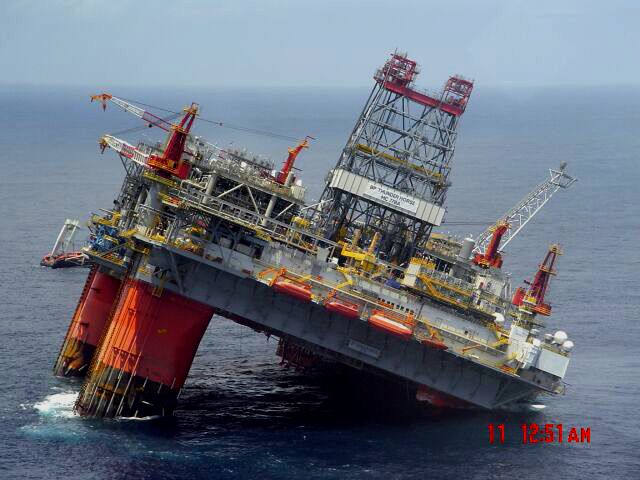
“It’s not Thunder Horse, it’s not going to set them back three years,” said Iain Armstrong, an analyst at Brewin Dolphin in London. Thunder Horse, BP’s flagship deepwater Gulf project, was plagued by delays before starting production in 2008.

BP Chief Executive Officer Tony Hayward has spent his first three years in charge restoring the company’s reputation for safety following a deadly blast at the Texas City refinery in 2005. BP and rig owner Transocean Ltd. are still working to contain an oil spill, and 11 workers remain missing.

BP planned to tie the well drilled by Deepwater Horizon to the company’s Pompano platform, the person said.

Even though there is no indication that BP was at fault in the accident, the explosion and subsequent oil spill could be damaging to BP’s reputation. Political fallout could also set back the cause of deepwater drilling, where BP is an industry leader.

‘Probably Nobody’s Fault’

“It’s probably nobody’s fault, but in the perception of the media, BP is going to be under pressure,” said Christine Tiscareno, an analyst at Standard & Poor’s in London. “Even though operationally and ethically the company has turned around, this may pull it back.”

The Coast Guard said the oil slick from the platform is 10 miles wide and 10 miles long. Remote-operated vehicles found no new leakages from the well yesterday.

“We are determined to do everything in our power to contain this oil spill and resolve the situation as rapidly, safely and effectively as possible,” BP’s Hayward said in a statement today. “We have assembled and are now deploying world-class facilities, resources and expertise, and can call on more if needed.”

If the 11 workers still missing were killed, it would be the deadliest U.S. offshore rig explosion since 1968, when 11 died and 20 were injured at a platform owned by Gulf Oil Corp., according to data from the Minerals Management Service.

Texas City

The March 2005 explosion of BP’s Texas City refinery, which killed 15 and injured hundreds, occurred when gasoline spilled into an antiquated vent system and ignited in a vapor-cloud explosion. The U.S. Occupational Safety and Health Administration in October 2005 found more than 300 safety violations and fined London-based BP, Europe’s biggest oil company, $21 million following an investigation.

BP’s safety record had been improving since the Texas City blast. The recordable injury frequency, a gauge of accidents for each 200,000 hours worked, fell to 0.34 last year from 0.43 in 2008. The figure was 0.53 in 2005, according to BP.

BP shares were little changed today after a 1.8 percent drop yesterday. They traded up 0.3 percent at 638 pence as of 2:17 p.m. in London.

Growing oil production from the Gulf of Mexico has contributed to BP’s turnaround under Hayward, who became CEO in 2007. BP decided to continue investing in the Gulf in the 1990s when drilling failures led the region to be dubbed the “Dead Sea.” The decision paid off.

About 450,000 barrels per day, or about 12 percent of BP’s production, comes from the Gulf including deepwater fields such as Thunder Horse and Atlantis.

Seismic Supercomputers

Using supercomputers to analyze seismic images from under the region’s characteristic salt deposits, BP continues to make new giant discoveries including last year’s Tiber find, which may have 3 billion barrels of oil.

Tiber was discovered by the Deepwater Horizon, the rig destroyed in the accident. The company plans to continue to focus on the Gulf of Mexico. At a strategy presentation March 2, Andy Inglis, BP’s head of exploration and production, listed six Gulf of Mexico projects for which final go-aheads are expected in 2010.


วันอังคารที่ 27 เมษายน พ.ศ. 2553

“สถานการณ์-ปฏิวัติหรือรัฐประหาร”


ยากมาก!!! แต่อยากลอง ของซ้ายตะกายขอบ ลองไปลองมา อาจตกเป็นเหยื่อกลุ่มทุน-นักอุตสาหกรรมที่อยากฉีกรัฐธรรมนูญ ปี 2550 อยู่ทุกวัน เพราะขวางทางโต!!!
มาตรา 67 วรรค 2 เป็นไปไม่ได้โดยการแก้ไข-ตัดออก แต่ต้องฉีกทิ้งทั้งฉบับ – เชื่อได้ว่า อาจเห็นแบบนั้น ในไม่ช้า ยิ่งรีรอชาติยิ่งเสียหายมาก ... แต่ใครล่ะจะทำ

“สถานการณ์ปฏิวัติ” ของมวลชน เพื่อมุ่งสู่การเปลี่ยนแปลงสังคม โดยสถานการณ์ดังกล่าว ย่อมมีความแตกต่างเป็นอย่างมากกับการเคลื่อนไหวเพื่อการยึดอำนาจของกลุ่มทหาร / การล้มล้างระบอบการปกครองโดยคนกลุ่มเล็ก ๆ ที่ใช้วิธีก่อการร้าย / การใช้มหาประชาชนเดินกดดัน
ดังนั้นการอธิบายเหตุการณ์ดังกล่าวจึงมีความสำคัญ และการที่จะชี้ให้เห็นถึงรูปธรรมแบบหนึ่งของการปฏิวัติรัสเซีย เมื่อปี 1917 โดยเฉพาะข้อคิดเห็นของเลนิน จึงเป็นกรณีที่ควรศึกษาและเป็นบทเรียนที่ควรนำมาทบทวน กล่าวคือ เมื่ออธิบายถึงสถานการณ์ปฏิวัติ จากการเคลื่อนไหวของพลังมวลชนในชนชั้นต่างๆ ย่อมมีมุมมองอันหลากหลาย แต่ถ้ามองจากสายตาของเลนินในฐานะผู้นำของพรรคบอลเชวิค ซึ่งเลนินได้ให้ข้อสังเกตุเกี่ยวกับกฎพื้นฐานทั่วไปของการปฏิวัติโดยมวลชนไว้ ดังนี้
1) การจะก่อการปฏิวัติ มวลชนผู้ถูกกดขี่ต้องรู้สึกว่าไม่สามารถใช้ชีวิตในรูปแบบการปกครองแบบเดิม และเรียกร้องให้เกิดการเปลี่ยนแปลงนั้นยังไม่พอ
2) เมื่อมวลชนชนชั้นล่าง ไม่ยอมใช้ชีวิตในรูปแบบการปกครองแบบเดิม ชนชั้นบนก็ไม่สามารถใช้ปกครองแบบเดิมได้อีก
โดยทั้ง 2 ข้อดังกล่าว ต้องประกอบเข้ากับ
3) วิกฤติที่มีลักษณะทั่วประเทศ ซึ่งสะเทือนทั้งมวลชนชั้นล่างและผู้ปกครอง
ปัจจัยทั้ง 3 ย่อมนำไปสู่สถานการณ์ปฏิวัติ ทั้งนี้เลนินในฐานะผู้มีบทบาทนำในพรรคบอลเชวิค เน้นทำให้มวลชนมีความตื่นตัวในการเคลื่อนไหวทางการเมือง ให้มีความรับรู้ถึงความจำเป็น และความพร้อมเสียสละในสถานการณ์ดังกล่าว โดยทำให้ชนชั้นปกครองหรือรัฐบาลวิกฤติ เพื่อจะช่วยดึงเอามวลชนจากส่วนต่างๆ เข้ามาร่วมเคลื่อนไหวในทางการเมือง อันเป็นการบั่นทอนกำลังของรัฐบาล ซึ่งเป็นเหตุและเงื่อนไขให้การเคลื่อนไหวทางการเมืองของมวลชนมีความเป็นไปได้ในการปฏิวัติ
ถ้าจะกล่าวจากมุมมองชนชั้น เลนินยังได้ให้ข้อสรุป และการอธิบายเพิ่มเติมไว้ อีกแบบหนึ่งว่า
1) พลังของชนชั้นที่เป็นศัตรูกับชนชั้นล่างต้องเกิดความวุ่นวาย และเข้าต่อสู้กันทางการเมืองอย่างรุนแรง จนอ่อนแอลง
2) ต้องทำให้พวกเป็นกลางที่ยังลังเล ให้เกิดความล้มเหลวในการปฏิบัติงานทางการเมืองต่อหน้าประชาชน
3) ทั้งนี้มวลชนที่สนับสนุนการปฏิวัติได้ออกมาเคลื่อนไหวอย่างเด็ดเดี่ยว กล้าหาญ เพิ่มจำนวนขึ้นอย่างมากมาย ในสถานการณ์แบบนี้ เลนินถือว่าสถานการณ์ปฏิวัติ จึงนับได้ว่าสุกงอมแล้ว ซึ่งทั้งหมดนี้ ก็เหลือแต่เพียงการเลือกโอกาสที่มีหลักประกันในชัยชนะของพลังในฝ่ายปฏิวัติเท่านั้น
สำหรับข้อสรุปดังกล่าวของเลนิน ในการปฏิวัติรัสเซีย เมื่อปี 1917 นั้น เลนินได้เขียนไว้ในหนังสือ “โรคไร้เดียงสา ฝ่ายซ้าย ในขบวนการคอมมิวนิสต์”


ความวุ่นวายของประเทศขณะนี้ เป็นได้แค่สถานการณ์รัฐประหาร เท่านั้น!!!

วันพฤหัสบดีที่ 22 เมษายน พ.ศ. 2553

แท่นเจาะน้ำมันสหรัฐฯระเบิด - เจ็บ 7สูญหาย 11


เกิดเหตุระเบิดแท่นขุดเจาะน้ำมัน "ดีพวอเตอร์ ฮอไรซัน" บริษัทขุดเจาะน้ำมันรายใหญ่ของสวิตเซอร์แลนด์ซึ่งขุดเจาะน้ำมันให้กับ บริษัทบีพี นอกชายฝั่ง ห่างเมืองเวนีซ รัฐหลุยส์เซียนาของสหรัฐฯ ไปทางตะวันออกเฉียงใต้ราว 84 ก.ม. เมื่อคืนวันอังคาร 20 เม.ย. ตามเวลาท้องถิ่น ซึ่งถือเป็นอุบัติเหตุของแท่นขุดเจาะน้ำมันครั้งแรกในรอบกว่าครึ่งทศวรรษที่ผ่านมาแรงระเบิดส่งผลให้เกิดไฟลุกไหม้แท่นขุดเจาะ ควันพวยพุ่งขึ้นนับร้อยฟุตเหนืออ่าวเม็กซิโกส่งผลให้มีผู้ได้รับบาดเจ็บ 7 คน โดย 4 คน ได้รับบาดเจ็บสาหัส และสูญหายอีก 11 คน จากทั้งสิ้น 126 คน ซึ่งทางเจ้าหน้าที่กู้ภัยได้ทำการออกค้นหา ทั้งทางน้ำและทางอากาศ โดยเฮลิคอปเตอร์แล้ว อย่างไรก็ดี ยังไม่มีการยืนยันสาเหตุของการระเบิดอย่างแน่ชัด เนื่องจากไฟยังลุกท่วม แต่จากการสันนิฐานเบื้องต้นว่าอาจจะเกิดจากก็าซธรรมชาติ หรือก๊าซผสมของน้ำมันที่รั่วออกมารวมตัวกับสารก่อระเบิดบางอย่าง


The Deepwater Horizon rig, 50 miles southeast of Louisiana, had 126 workers on it when the explosion happened.

Helicopters and boats were scouring the Gulf for any sign of the workers who had not been accounted for.


Coast Guard Senior Chief Petty Officer Mike O'Berry said: "We're hoping everyone is in a life raft."
The rig was left tilting about 70 degrees and threatening to topple into the water.
It is owned by Transocean, based in Houston, and was under contract to BP. A BP spokesman said all its personnel were safe.
When the explosion happened the rig was drilling but was not in production.
Initial reports were as many as 12 missing, but the Coast Guard counted 98 survivors on two oil service boats and 17 injured, seven critically, who were taken to hospitals. Eleven were still unaccounted for at midday Wednesday, according to the Coast Guard.
Transocean spokesman Greg Panagos said it was too early to know what caused the accident.
He said: "Our focus right now is on taking care of the people." The 120-metre (396ft) long, semi-submersible Deepwater Horizon was still on fire hours after the explosion.
It was built in 2001 by Hyundai Heavy Industries Shipyard in South Korea and can accommodate a crew of up to 130.
Last year it set a world deepwater record when it drilled down over 10,700 metres (35,000ft) at another BP site in the Gulf of Mexico.
It is equipped with covered lifeboats with supplies to allow workers to survive for extended periods if they must evacuate.
Greg McCormack, director of the Petroleum Extension Service for the University of Texas at Austin,said: "The worst thing that can happen on an oil rig is you have a fire, and then you have to evacuate without the fire being put out, because then it can only get worse."